What do ITSO, open-loop and concessionary ticketing and other terms mean?
Standards, entitlements, payment methods and ticket media are different layers of a transport ticketing service.
People search for
In this article
A ticketing discussion can move quickly from ITSO to contactless, concessionary travel and account-based ticketing. ITSO is a specification. Concessionary travel is an entitlement. Open-loop concerns a bank-issued payment credential. Account-based ticketing describes where journeys and fares are calculated. Confusing these layers can create problems before an Authority has defined the service.
Put each term in the right category
| Category | What it describes | Common terms |
|---|---|---|
| Product or entitlement | What the passenger is allowed to use | Single, return, season ticket, concessionary entitlement |
| Coverage | Where and with whom it is valid | Multi-Operator, multi-modal, integrated ticketing |
| Medium | What the passenger presents | Paper, barcode, mobile ticket, smartcard, phone |
| Payment or identification | How the passenger pays or identifies the journey | Cash, contactless bank card, cEMV, open-loop, closed-loop |
| Fare calculation | When and where the fare is worked out | Pre-purchase, pay as you go, account-based ticketing, capping |
| Processing and revenue | How transactions and money are handled | ITSO, HOPS, settlement, apportionment, reimbursement |
Products, entitlements and coverage
A ticket product defines the passenger’s right to travel. It may be a single, return, bundle or period pass, issued on paper, a smartcard or an app.
Concessionary travel is an entitlement, not a payment method. England’s national scheme provides free local bus travel to eligible older and disabled people. Authorities can add local concessions. The pass is an ITSO smartcard, but ITSO does not determine eligibility, validity or reimbursement.
A multi-Operator ticket is accepted by more than one Operator on the same transport mode. A multi-modal ticket covers several transport modes. Integrated ticketing means products or payments work across the intended network. It needs commercial agreement as well as compatible technology.
Media, smart ticketing and ITSO
The ticket medium is what the passenger presents: paper, barcode, smartcard, bank card or phone. It is not the product itself.
Smart ticketing covers electronic tickets and payments, including ITSO smartcards, app barcodes and contactless bank-card payments. A requirement for “smart ticketing” therefore says little about the passenger offer.
ITSO is the UK specification for creating, securing and exchanging smart tickets. It supports interoperability between compliant systems when the necessary scheme arrangements exist.
A HOPS, or Host Operator or Processing System, processes ITSO transactions. It does not necessarily cover the entire retail, customer-service, reporting or revenue platform.
Payment and fare-calculation terms
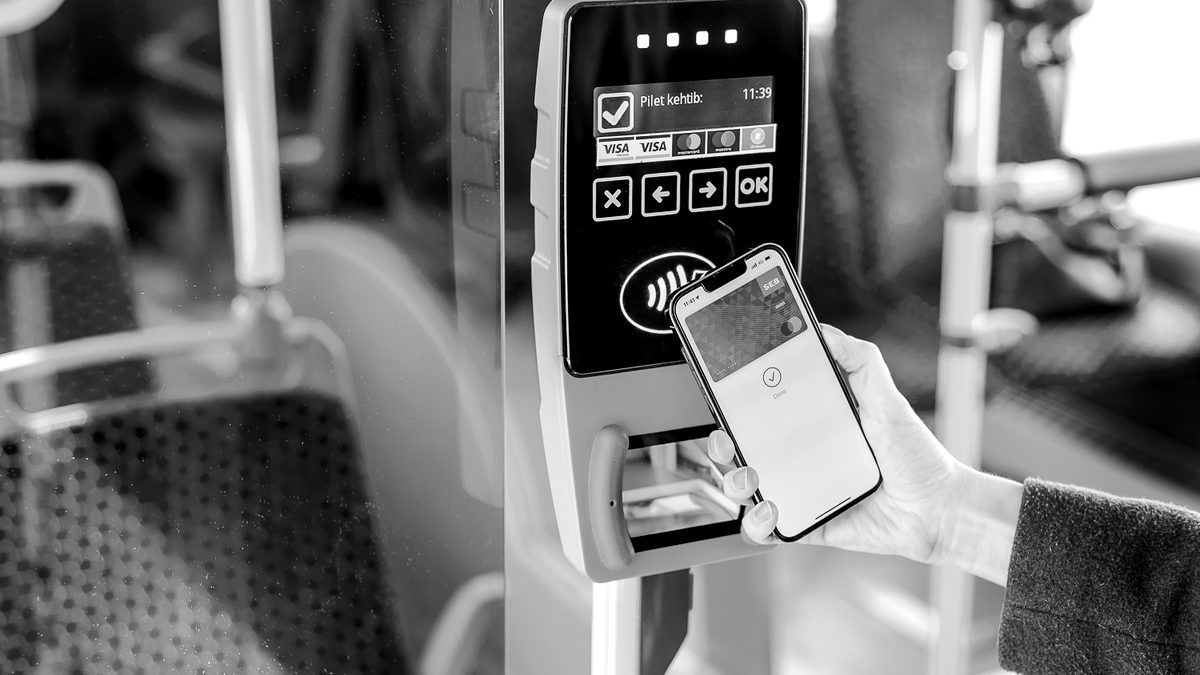
Contactless commonly refers to bank-card payment. ITSO smartcards also communicate without contact. cEMV means a contactless bank card or digital wallet using the payment-card networks.
An open-loop service accepts a bank-issued card or device. A closed-loop service uses a credential issued for a defined transport scheme. Open-loop does not mean integrated.
Pay as you go charges for journeys made rather than requiring a conventional ticket in advance. It can use an open-loop bank card or a closed-loop transport card.
In account-based ticketing, the back-office records journeys and applies fare rules. The card, phone or smartcard identifies the record. It is not synonymous with open-loop because an Authority-issued smartcard can identify an account.
Fare capping limits payment over a defined period or set of journeys. It applies only to the Operators, transport modes, products and times included in its rules.
Terms concerned with money
Settlement confirms transactions and moves money between parties. Revenue apportionment divides income from a shared product between Operators. Concessionary reimbursement compensates Operators for eligible journeys. These processes may use different data. In the case of bus franchising, all revenue is under Authority control.
This is why “we need ITSO and contactless” is not a complete requirement. It says nothing about the products to be accepted, the fare rules, concessionary travel, customer support or the distribution of revenue.
Ticketing addressed in the Target Operating Model
Ticketing should be designed around the customer proposition in the Authority’s Target Operating Model. The passenger offer determines what needs to be done, from setting fares to resolving refunds and reconciling revenue.
The model should show who changes fares, configures systems, supports passengers and Operators, checks income, manages failures and assures performance. It should identify the hand-offs and data required.
The Authority can then translate the model into requirements for contactless, ITSO or integrated ticketing. An acronym is not a passenger proposition or an operating model.
We assess and design ticketing strategies for rural and urban networks. The work informs technology options and the ticketing specification for procurement. Our Managed Ticketing Supplier approach may suit smaller and medium-sized Authorities that want a single Supplier to manage the full ticketing service.
Useful questions
Before approving a ticketing strategy or procurement, an Authority should be able to answer the following.
- Which passenger products and entitlements must be supported, including concessionary and locally funded travel?
- Across which Operators, modes and geographical areas must each product be accepted?
- Is the card, phone or barcode carrying a ticket, identifying an account or making a payment?
- Where are fares, caps and validity rules calculated, and which role owns each decision and process?
- Does the Target Operating Model assign responsibility for customer support, reconciliation, reimbursement, system change and performance assurance?
More on Ticketing & Payment Technology
Ticketing & Payment TechnologyArticleWhat happens to the ticketing app once nobody needs to buy a ticket?Ticketing & Payment TechnologyArticleHow does the ticketing service join up the passenger app and the payment reporting? Franchising & Procurement StrategyArticleHow does an Optimised Enhanced Partnership join up the customer experience?