How does the ticketing service join up the passenger app and the payment reporting?
An Authority can procure every component of a ticketing service and still have to make them work together.
People search for
In this article
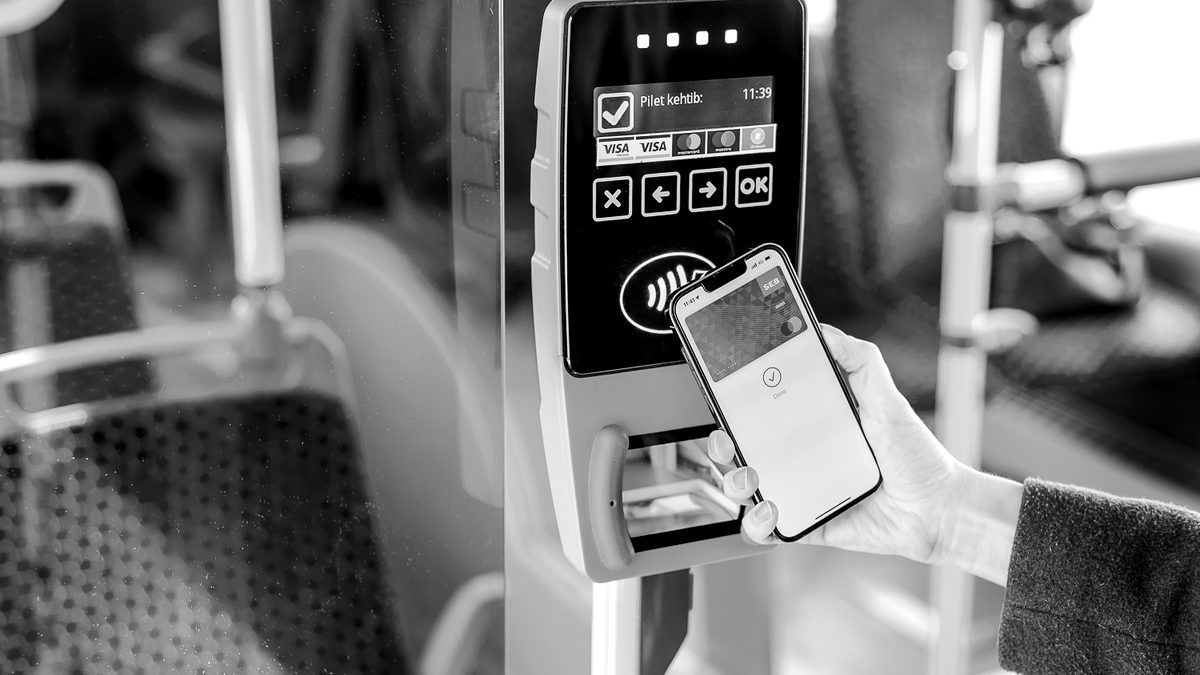
A passenger plans a journey, presents a ticket and boards a bus, tram or train. That sequence may involve an app Supplier, ticket machines or validators, a payment service provider (PSP), an ITSO back office and Operator ticketing systems.
When components are procured and managed separately, the Authority inherits the interfaces. A failed payment may be attributed to the app, the bank or the back office, while finance staff may receive conflicting payment figures.
For this reason, an Authority may procure a Managed Ticketing Supplier rather than a collection of ticketing products.
Treat ticketing as one operating service
The ticketing service starts before payment and continues after the passenger has travelled. Its main parts must work as a single chain.
| Part of the service | What the Managed Ticketing Supplier can be responsible for |
|---|---|
| Passenger app | Journey planning, ticket purchase, account access, live information, accessibility and release management |
| On-bus operation | Ticket machines, validators, fare configuration, ticket acceptance, maintenance and replacement |
| Payments | Contactless and app payments, authorisation, fraud controls, fare capping and transfer of funds |
| Ticketing back office | Transaction processing, account-based fares, ITSO products, refunds, hotlists and exception handling |
| Operator support | Driver guidance, fault reporting, device monitoring, technical support and service restoration |
| Finance and assurance | Transaction reports, reconciliation, revenue settlement, concessionary data and performance reporting |
If the Authority procures ticket machines and validators, specifies the ticketing back office and procures the Payment Service Provider, it becomes responsible for managing the interfaces. This integrator responsibility covers reconciling and managing multiple Suppliers, chairing fault calls and moving data between systems.
Start with the Target Operating Model
Ticketing should be designed alongside the customer proposition within the wider Target Operating Model. Selecting a Supplier first can let the technology dictate how the Authority operates and what constraints follow.
The model should follow the service from the app and on-bus transactions through customer support, settlement and payment reporting. It should identify who does the work, makes decisions, uses the information and owns failures.
This identifies the procurement decisions. The Authority can retain a function, assign it to an Operator or Supplier, or ask a Managed Ticketing Supplier to integrate it. Each responsibility needs an owner and clear, workable operational boundaries.
One accountable Supplier changes the work
A managed service gives the Authority one organisation accountable for the end-to-end ticketing service. The Supplier may use specialist partners but remains responsible for making their services work together.
This matters when a failure crosses components. The Authority should not need to establish whether an app error originated in the fare table, payment gateway or back office. The Managed Ticketing Supplier owns the investigation, response and outcome.
The same applies to routine work. Operators need a direct route for reporting faults. Finance teams need reconciled reports, and app releases must be tested against live fares. The Supplier coordinates the work and presents exceptions with supporting evidence.
The Authority still owns the important choices
A Managed Ticketing Supplier does not take over fare policy or the passenger offer. The Target Operating Model should reserve Authority control over fares, accepted tickets, concessions, customer proposition and experience, and data.
The Authority defines and approves service requirements, reviews performance and decides material changes. The Supplier runs the daily operation and provides the evidence needed for assurance.
This keeps key decisions with Authorities and avoids recreating the structure and overhead of a large Combined Authority. It also reduces avoidable administration.
Payment reporting belongs inside the service
A ticketing service that records journeys yet leaves the Authority to establish the payment and financial reconciliation position is incomplete. Transactions should feed into payment and cash reports, exception handling, revenue settlement and concessionary-travel data.
A revenue total should be traceable to transactions, fare products, payment methods, routes and corrections. The Managed Ticketing Supplier should investigate inconsistencies rather than require Authority staff to compare spreadsheets.
App outages, device faults and missing transactions have financial consequences. A single review process lets the Authority understand the complete issue and hold one Supplier to account.
Make sure “managed” is contractual
A single Supplier reduces interfaces but concentrates dependency. The contract must make service integration explicit.
The specification should translate the Target Operating Model into service levels, incident ownership, continuity, security, data access and reporting. It should require open interfaces, transparent subcontracting and an orderly exit with usable data and documentation.
The test is straightforward: when the app, a validator or a finance report fails, can the Authority identify one Supplier that must restore the service and explain what happened?
We assess and design ticketing strategies for rural and urban networks. The work informs technology options and the ticketing specification for procurement. Our Managed Ticketing Supplier approach may suit smaller and medium-sized Authorities that want a single Supplier to manage the full ticketing service.
Useful questions
Before deciding whether to procure a Managed Ticketing Supplier, an Authority should ask:
- Does the Target Operating Model cover the journey from the passenger app through to reconciliation and finance reporting?
- Who performs, decides, supports and assures each part of the ticketing service, including the interfaces?
- Which fare, product, data and passenger-service decisions must remain under Authority control?
- Will the Supplier provide reconciled financial and performance information that can be traced back to the underlying transactions?
- Do the contract, interfaces and exit arrangements allow the Authority to change Supplier without losing service continuity, data or control?
More on Ticketing & Payment Technology
Ticketing & Payment TechnologyArticleWhat happens to the ticketing app once nobody needs to buy a ticket?Ticketing & Payment TechnologyArticleWhat do ITSO, open-loop and concessionary ticketing and other terms mean? Franchising & Procurement StrategyArticleHow does an Optimised Enhanced Partnership join up the customer experience?