ITS specification and integration
Vehicle location, real-time information, control room and on-bus systems specified to work together. Not forgetting where the ticketing machine is part of ITS.
Technology, Data and AI
We support Authorities specify the Intelligent Transport Systems (ITS) a modern bus network needs, own the data those systems produce and use it, with AI where it genuinely helps.
Bus technology is usually bought system by system: vehicle tracking, real-time information, control room, ticketing as part of a bus specification. Each arrives with its own data and its own supplier. The Authority ends up with plenty of data and little insight.
Operators may resist sharing data, and contracts often fail to say who owns it or how it will be used. AI promises much, but without governance it adds risk rather than value.
Vehicle location, real-time information, control room and on-bus systems specified to work together. Not forgetting where the ticketing machine is part of ITS.
A clear split of technology responsibilities between Authority, Operators and suppliers, under franchising or partnership.
What data the Authority needs, who owns it, how it is governed and how it supports growth as well as compliance.
Bus Open Data, stop data and the national data standards built into contracts and systems.
Patronage, revenue, punctuality and fleet data brought into one view for decision-makers.
Governed, repeatable use of AI for analysis and drafting, with assurance built in.
Right of Way training builds skills and knowledge for your teams.
Vehicle location, real-time information, control room and on-bus systems specified to work together.
View the Right of Way courseTeaches teams to use AI tools for analysis and drafting through a governed, repeatable approach with assurance.
Talk to us about this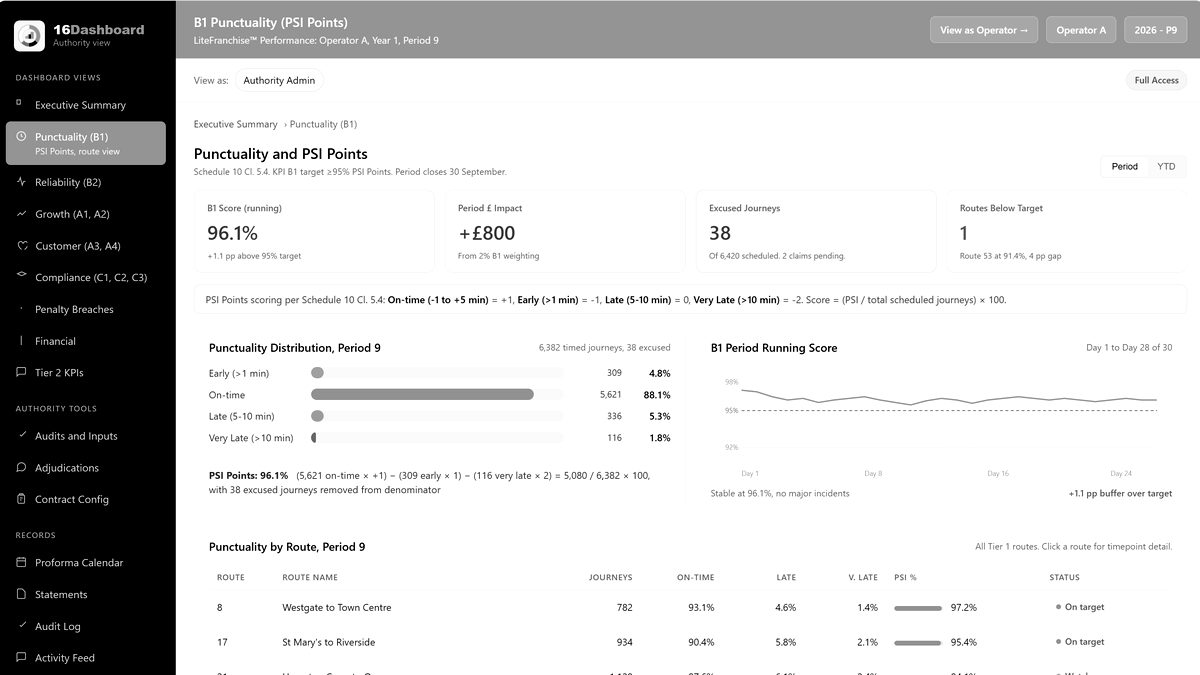
Publishing open data and meeting reporting deadlines are necessary. They do not tell an Authority which route, journey or customer problem is worth investing in.
An Authority that asks for “all data” in a contract may find that it has specified far less than it thinks.
Bus data is useful only when an Authority, its Operators and their systems share the same definition of a route, fare or vehicle location.
An Operator’s objection to a broad data clause may arise because the Authority has not specified what it needs or how it will handle it.
A passenger may plan a journey on a map, buy a ticket in your ticketing app, tap in, read a stop display and make a complaint. An Authority needs to know what each interaction records, who holds it and what may properly be joined up.
When live tracking is unavailable, the app should make clear whether a departure time is live, based on a timetable or cannot be confirmed.