Practical thinking for Authorities and Operators shaping public transport. Browse by capability below for articles of interest. Use the search function across all capabilities.
Article5 min read
Technology, Data and AI
What are bus data standards and why should a Transport Authority care?
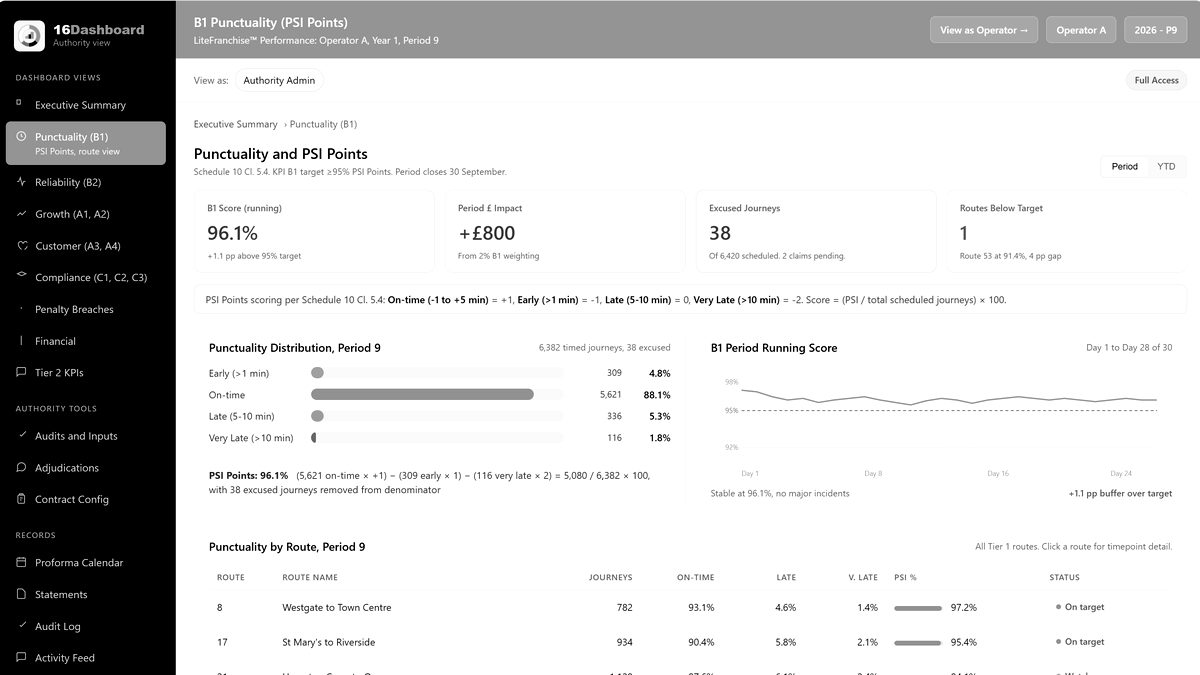
Bus data is useful only when an Authority, its Operators and their systems share the same definition of a route, fare or vehicle location.
White paper
Passenger Information and Digital Experience
The Overlooked Asset: Redesign of Bus Stop and Station Information Panels as a Way to Grow Patronage
Why bus stop and station information panels are an overlooked sales channel, and how redesigning them can grow patronage.
Article7 min read
Bus Reform Strategy and Business Case
How does an Optimised Enhanced Partnership join up the customer experience?
An Optimised Enhanced Partnership can give passengers one network experience while Operators retain fare revenue, but it requires the Authority to lead the proposition, procure the common platform and govern growth as a commercial partnership.
Article5 min read
Customer Experience and Safety
What can Japan’s railway tradition teach us about customer service?
Good passenger service depends less on a new channel than on whether the people answering it can see, own and resolve the same problem.
Article7 min read
Bus Reform Strategy and Business Case
Can a conventional Enhanced Partnership grow patronage?
A conventional Enhanced Partnership can improve common standards, but each Operator retains its fare revenue, products and customer relationship, leaving the Authority to coordinate growth across several propositions.
Article6 min read
Passenger Information and Digital Experience
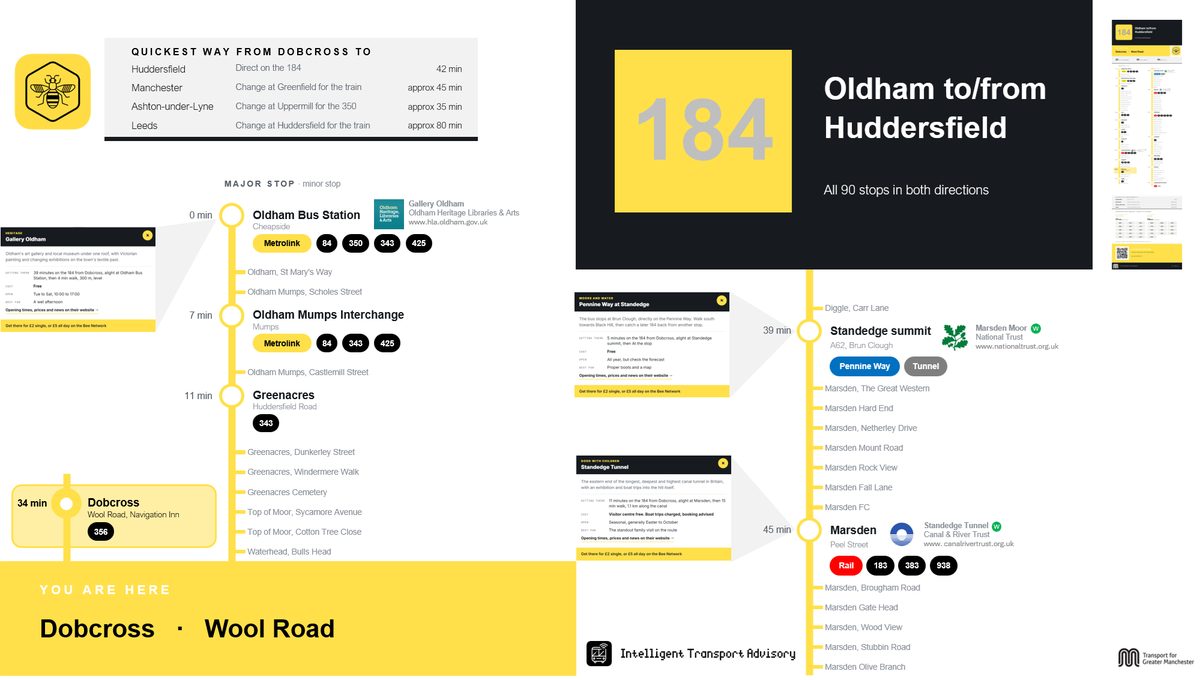
Why does your bus stop timetable answer the wrong question?
A timetable tells people when the bus is due. It rarely gives the undecided passenger a reason to use it.
Article6 min read
Performance and Continuous Improvement
Does bus reform end on launch day?
Launch day shows that a new bus network can start. Its reputation is shaped in the months that follow, as the Authority addresses defects, data gaps and passenger issues that mobilisation did not expose.
Article5 min read
Technology, Data and AI
Why do Operators push back when you ask for their data?
An Operator’s objection to a broad data clause may arise because the Authority has not specified what it needs or how it will handle it.
Article6 min read
Customer Experience and SafetyAccessibility and Inclusion
Who are digital bus services designed for?
Digital bus services need to work for the passengers who depend on them, including those who cannot or do not want to rely on a smartphone.
Article5 min read
Procurement and Contracts
Is your franchising contract about buses or about passengers?
Fleet and depot decisions matter, but the contract also has to settle the fares, information and service recovery that shape a passenger’s journey.
Article6 min read
Customer Experience and Safety
What does a good lost property service look like?
Passengers need a single place to report a lost item and a credible way to reach the person who can find it.
Article7 min read
Technology, Data and AI
Is your data strategy built for compliance or for growth?
Publishing open data and meeting reporting deadlines are necessary. They do not tell an Authority which route, journey or customer problem is worth investing in.
Article7 min read
Operating Model and Technical Reference Model
Which commercial disciplines does a franchising Authority need?
An Authority carrying fare-revenue risk needs the customer, product, revenue and investment disciplines of a commercial enterprise, applied within clear public-service guardrails.
White paper
Depot as a Service
Depot as a Service: Separating the Running of Buses from Their Care
Depot as a Service separates running the buses from caring for them. One specialist provider runs the site, supplies the energy and prepares every bus.
Article7 min read
Programme Design and Delivery
What does the Bus Services Act 2017 require and how do you get there faster?
The statutory route to bus franchising is clear, but an Authority must still make network, financial and contractual decisions before using it.
Article6 min read
Customer Experience and Safety
Are we benchmarking bus digital experience against the wrong thing?
Being ahead of a neighbouring Authority is context, not evidence. The useful unit of comparison is the passenger task.
Article6 min read
Passenger Information and Digital Experience
What would it take to make the bus beat the car?
Making a bus competitive with the car means addressing the parts of a journey that make a passenger hesitate, as well as the time spent in traffic.
Article6 min read
Bus Reform Strategy and Business Case
How to build a bus franchising business case that can withstand scrutiny
What a Franchising Assessment has to prove about affordability, procurement and delivery, and where the hard work really sits.
Article6 min read
Customer Experience and Safety
Should Transport Authorities trust AI to talk to passengers?
AI can help passengers find information, but an Authority remains responsible when an answer is wrong.
Article6 min read
Operating Model and Technical Reference Model
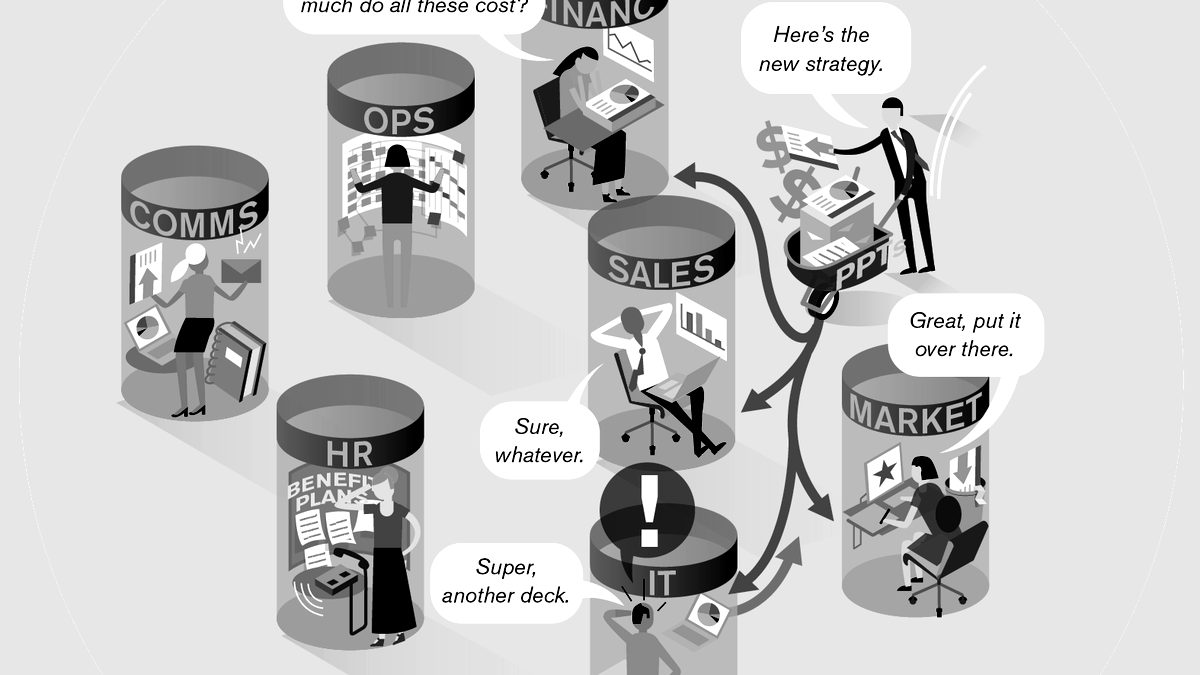
Is your organisation ready to run a bus network, not just award bus contracts?
Franchising gives an Authority greater control of the network and brings day-to-day responsibilities that a contract alone cannot carry.
Article5 min read
Technology, Data and AI
Why does “all data” end up meaning no data at all?
An Authority that asks for “all data” in a contract may find that it has specified far less than it thinks.
Article5 min read
Performance and Continuous Improvement
Can continuous improvement survive the life of a contract?
An ambitious tender response will not improve a bus network on its own. The live contract must require decisions, evidence and follow-through.
Article6 min read
Procurement and Contracts
Gross cost or net cost: which bus contract fits your Authority?
The contract form determines who carries the consequences when fares and passenger numbers do not follow the plan.
Article5 min read
Customer Experience and Safety
Is your customer contact centre budget solving the problem or hiding it?
When an Authority assumes responsibility for customer contact, a call centre can look like the obvious answer. It is worth testing the demand before that assumption becomes a fixed cost.
Article4 min read
Customer Experience and Safety
Is your call centre solving problems or just recording them?
Contact-centre demand can expose weak passenger information, a failed journey or a task that genuinely needs a person. An Authority must tell the difference before trying to reduce calls.
Article5 min read
Operating Model and Technical Reference Model
Should digital passenger experience report to IT?
Digital passenger services need reliable IT delivery. The Authority function accountable for the passenger journey should set their day-to-day priorities.
Article8 min read
Bus Reform Strategy and Business Case
How bus franchising works: a practical guide for UK Authorities
A step-by-step guide to UK bus franchising under the Bus Services Act 2017: assessment, audit, consultation, decision and implementation.
Article7 min read
Bus Reform Strategy and Business Case
What does bus franchising turn your Authority into?
Under a gross-cost model, the Authority sets the passenger proposition, receives the fare revenue and carries the risk when patronage does not arrive.
Article4 min read
Ticketing and Payments
What happens to the ticketing app once nobody needs to buy a ticket?
Once contactless payment and fare capping remove much of the need to buy before travelling, an Authority’s app still has work to do.
Article6 min read
Technology, Data and AI
Why does your bus app say a bus is coming when it isn’t?
When live tracking is unavailable, the app should make clear whether a departure time is live, based on a timetable or cannot be confirmed.
Article6 min read
Ticketing and Payments
How does the ticketing service join up the passenger app and the payment reporting?
An Authority can procure every component of a ticketing service and still have to make them work together.
Article7 min read
Ticketing and Payments
What do ITSO, open-loop and concessionary ticketing and other terms mean?
Standards, entitlements, payment methods and ticket media are different layers of a transport ticketing service.
Article5 min read
Technology, Data and AI
Do you know where all your passenger data goes?
A passenger may plan a journey on a map, buy a ticket in your ticketing app, tap in, read a stop display and make a complaint. An Authority needs to know what each interaction records, who holds it and what may properly be joined up.
Article6 min read
Procurement and Contracts
Patronage first: who is paid to grow the franchised bus network?
Under a gross-cost franchise, the Authority normally retains the fare revenue. The contract should still give the Operator a practical role and a meaningful reason to help grow it.